The $28 Fee That Hides Three Different Housing Markets in Mechanicsville
September 24, 2026
September 24, 2026
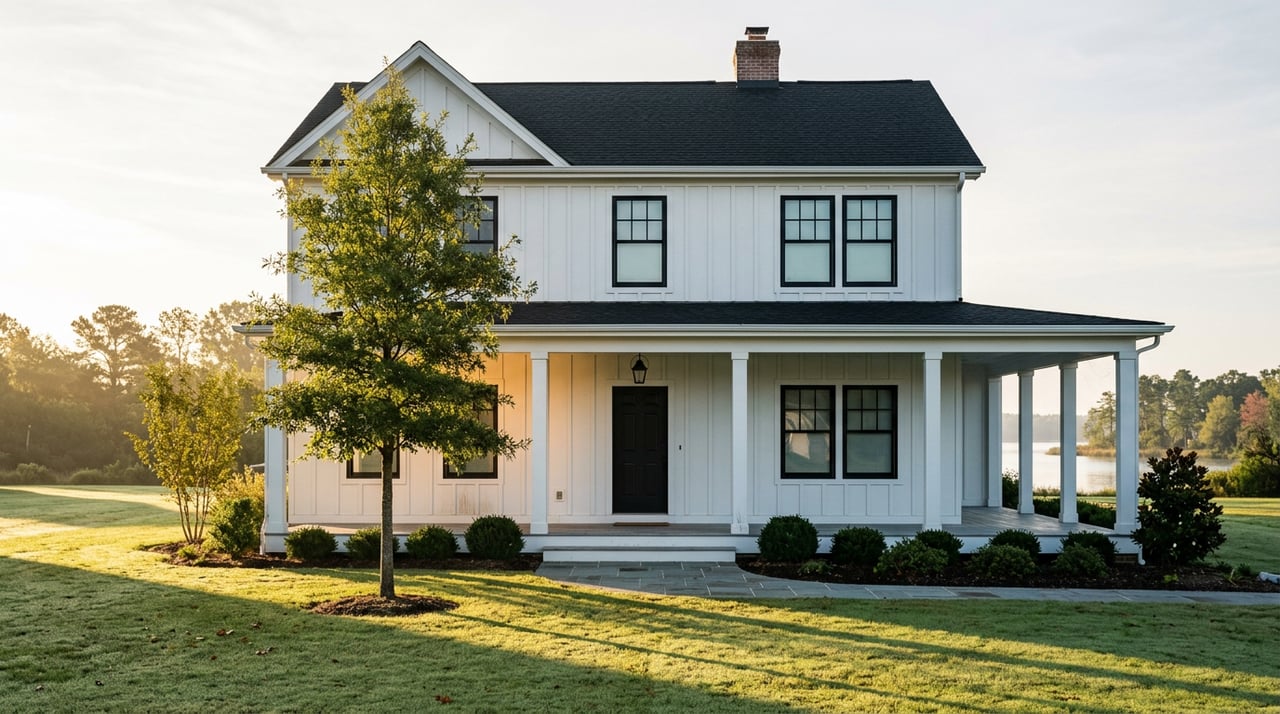
Twenty-eight dollars a year. That is the entire covenant fee for Golden Beach, the waterfront community tucked along the Patuxent River in Mechanicsville. No mortgage-crushing assessment, no monthly draft from your checking account, just $28, billed once annually by the volunteer-run Beach Management Corporation, known locally as BEMANCO.
It sounds like the best deal in Southern Maryland. In a lot of ways, it is. But if you are comparing Mechanicsville communities right now, the number that should catch your attention is not how low that fee sits. It is what that fee does not do, and how differently the two other common paths into Mechanicsville handle the same underlying costs.
Mechanicsville does not have one housing market. It has three, and each one pays for its own infrastructure through a completely different mechanism. Understanding which mechanism you are buying into matters more than the sticker price, because as of September 2026 the town's median list price has settled in the mid-$400,000s, and that single number flattens communities that have almost nothing else in common.
Start with Golden Beach, also known as Patuxent Knolls, where residents pay that $28 covenant fee to BEMANCO in exchange for private beaches, boat ramps, playgrounds and a civic association that runs the annual Fourth of July parade and fireworks. It is a volunteer model. Neighbors fund the shared amenities directly, at a price low enough that BEMANCO's own materials note the fee does not cover its expenses, which is why the organization runs fundraisers throughout the year to fill the gap.
Then there is Wicomico Shores, a few minutes away, where homeowners live next to an 18-hole golf course built in 1962 by architect Ed Ault, a clubhouse with the Riverview Restaurant overlooking the fairways, a public boat ramp and a 150-foot fishing pier on the Wicomico River. None of it is funded by an HOA. St. Mary's County government owns and operates the entire 145-acre complex, which means the amenity exists whether or not any individual homeowner pays a dime toward it.
And then there is the acreage market: subdivisions like Riverwood Farms on Cat Creek Road and Quiet Acres, where lots run three, four, sometimes twelve acres, carry no HOA at all, and are marketed on the strength of a passed perc test rather than a clubhouse. Here, there is no shared fee because there is nothing shared. Every well, every septic field, every foot of driveway is the buyer's to install and maintain alone.
Three communities, three completely different answers to the same question: who pays for what you're about to enjoy, and when.
Golden Beach looks like the cheapest option on paper, and for day-to-day carrying cost, it largely is. But a covenant fee that size was never built to fund capital repairs. Bulkheads erode. Boat ramps need resurfacing. Piers need lumber. When BEMANCO needs money beyond what $28 a year raises, it asks the community to fundraise, which is a reasonable and often effective way to run a small waterfront association, but it is not the same thing as a reserve account sitting behind a larger monthly assessment.
If you are comparing Golden Beach to a community with a $200-a-month HOA, you are not comparing apples to apples. You are comparing a pay-as-problems-arise model to a save-in-advance model. Neither is wrong. But only one of them tells you, in advance, what a bad year could cost you.
Wicomico Shores flips the equation entirely. Nobody who owns a home near the course pays an association fee for the golf course, the restaurant, the boat ramp or the fishing pier, because none of those amenities are theirs to fund. The county built the course in 1962, the county still runs it, and the course is open to the public, not gated to homeowners.
That is worth sitting with for a second. A buyer near Wicomico Shores gets a country-club adjacent lifestyle without a country-club adjacent bill, because the cost has already been absorbed elsewhere, by the broader tax base rather than the immediate neighborhood. It is the closest thing Mechanicsville has to a free amenity, and it is free specifically because someone other than your future HOA is paying for it.
The acreage subdivisions market themselves the opposite way. Riverwood Farms and Quiet Acres advertise freedom from HOA rules as a selling point, and it is true that nobody is going to fine you for the wrong shade of shutter. But "no HOA" on a wooded lot does not mean no infrastructure cost. It means the cost has not been pooled with anyone.
A lot that has "passed perc," the phrase that shows up again and again in these listings, has cleared one hurdle toward buildability, but the buyer still installs and pays for the well, the septic system, and the driveway from scratch, alone, with no association to share the burden or the bill. On a golf course lot or a beach community lot, some of that groundwork was solved decades ago by a developer or a county and folded into the price of living there. On raw acreage, it has not been solved yet, and it will not solve itself.
This is where the math gets genuinely useful for a buyer trying to compare across all three markets. Right now, vacant land listed in and around Mechanicsville is asking, on average, somewhere in the neighborhood of $80,000 an acre. Parcels that already have a house built on them are asking closer to double that per acre, when you back the value out across the listed acreage.
That gap is not decoration and it is not location alone. It is the cost of everything that turns dirt into a livable lot: the well, the septic system, the driveway, the grading, the permitting. A buyer looking only at price per acre on a raw parcel is looking at half the real number. The build-out cost is coming, it is just not on the sign yet.
A cheap acre and a cheap fee are not the same kind of cheap. One is a price. The other is a bill that has not arrived.
Before treating any two Mechanicsville listings as directly comparable, it helps to ask a few pointed questions rather than lean on the HOA line item alone:
None of these questions have a universally right answer. A buyer looking for beach access on a tight monthly budget might genuinely prefer Golden Beach's low fixed cost over a reserve-funded HOA elsewhere. A buyer who wants total control over their five acres might prefer the upfront cost of raw land to a shared amenity they'll rarely use. The point is not to rank the three models. It is to know which one you're buying into before closing day, not after.
Does a $28 covenant fee count as an HOA for mortgage or insurance purposes? Lenders and title companies generally look at whether recorded covenants exist and whether fees are current, not the dollar amount. A small fee can still come with a lien right if unpaid, so confirm the association's standing before you're at the settlement table.
Is a no-HOA acreage lot actually cheaper once you factor in build-out? Sometimes, but not automatically. Compare the finished cost, land plus well plus septic plus driveway, against a comparable finished home in an established community before assuming raw acreage wins on price.
If you are weighing a waterfront lot in Golden Beach against a wooded parcel near Quiet Acres, or trying to figure out what living next to a county-run golf course actually costs you long term, that is exactly the kind of comparison worth walking through with someone who knows these specific streets. Hammer & Heels Realtor works Mechanicsville and the rest of Southern Maryland every week, and can help you read a listing's fine print the way you'd want it read before you sign anything. Reach out and let's map your options against what each one actually costs to own.
This article is general information, not legal, tax or financial advice. Consult a qualified professional about your situation.
Stay up to date on the latest real estate trends.
Get assistance in determining current property value, crafting a competitive offer, writing and negotiating a contract, and much more. Contact Laura today to discuss all your real estate needs!
Laura Lee Hefley
23076 Three Notch Rd California MD 20619