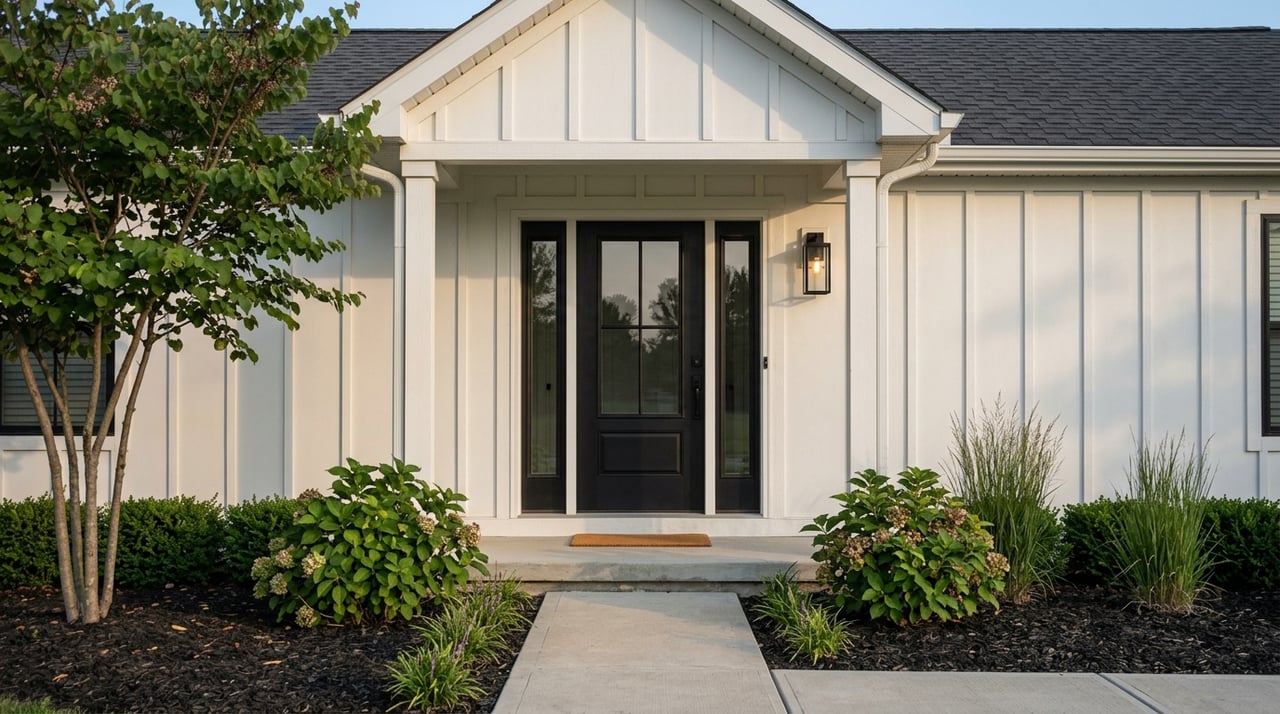
Smart Pricing Strategies For Selling In Great Mills, MD
July 2, 2026
July 2, 2026
Selling in Great Mills can feel simple on the surface. Homes are still moving fast, and local buyers are active. But in a market where many homes sell close to asking price, your list price can either create momentum or quietly work against you. If you want to sell with confidence, the key is understanding how local data, competition, and presentation all work together. Let’s dive in.
Great Mills is still leaning toward sellers, but it is not a market where you can pick any number and expect buyers to follow. In May 2026, Realtor.com described 20634 as a seller’s market with a median listing price of $409,000, about a mid-20s active listing count, a 100% sale-to-list ratio, and a median 28 days on market.
That sounds strong, and it is. Still, strong does not mean automatic. At the county level, St. Mary’s County looked more balanced, with a median listing price of $465,000, 574 active listings, and a median 23 days on market. Bright MLS and Maryland Realtors data also showed recent county sold prices clustering around $425,000 to $430,000, with just 1.6 to 1.7 months of supply.
For you as a seller, that means buyer demand is real, but buyers still compare options carefully. If your home is priced right from day one, you are more likely to attract strong traffic and better offers.
One of the biggest pricing mistakes sellers make is relying too much on county-wide averages. Great Mills often behaves differently from the county as a whole because buyers are usually comparing a very short list of nearby homes, not every listing in St. Mary’s County.
That matters even more at the neighborhood level. Realtor.com reported that the Great Mills Corridor had only three homes for sale in April 2026. When inventory is that limited, pricing needs to reflect your home’s exact competition, not just broad market headlines.
This is why a smart pricing strategy starts with your micro-location. The right comparison is usually the most similar home in your subdivision or immediate area, with similar size, age, condition, and updates.
A strong list price should never be based only on the highest nearby asking price. Asking prices show what sellers hope to get. The better anchor is a mix of recent sold homes, pending homes, and active competition.
Recent sold comps show what buyers have already agreed was fair. Pending comps can hint at what current buyers are willing to do right now, even before final sale numbers close. Active listings show what you will be up against the moment your home hits the market.
This three-part view gives you a more realistic pricing range. It also helps you understand which comp should carry the most weight and why.
Closed sales are the clearest proof of market value because they reflect completed buyer decisions. In a market like Great Mills, where homes are often selling near asking price, recent sold comps can help you avoid reaching too high.
If the strongest recent comparable home sold at a certain number, there may be only modest room to push above it unless your home clearly offers better condition, updates, or features. Precision matters more than bravado.
Pending homes can be especially helpful when the market is moving quickly. Bright MLS reported 130 new pending sales in St. Mary’s County in March 2026, along with 87 detached closed sales, a median sold price of $425,000, and just 13 median days on market.
That kind of activity tells you buyers are still making decisions quickly. If several similar homes have gone pending fast, your pricing should reflect that current demand without assuming buyers will ignore differences in condition or presentation.
Active listings matter because they shape buyer choice in real time. If your home enters the market slightly above similar active homes, buyers may skip it before ever scheduling a showing.
This is where price-band discipline becomes important. In a market where many homes trade close to asking price, even small pricing differences can affect how many buyers see your home in saved searches and whether it lands in the right bracket for online filters.
Condition should be priced, not assumed. A home that needs repairs or has deferred maintenance should not be priced like a turnkey home just because the square footage is similar.
Upgrades, renovations, layout, age of major systems, and overall presentation all affect what buyers will pay. A clean, staged, professionally photographed home that feels move-in ready usually gets more attention than a similar home that feels unfinished or tired.
This is one area where construction knowledge can make a real difference. If you know what updates truly add value and which issues buyers may flag quickly, you can price more accurately and avoid losing momentum.
Not every seller has the same goal, and your pricing strategy should reflect that. If your top priority is speed and certainty, you may want a more competitive launch price that encourages quick showings and stronger early interest.
If you have more flexibility and want to test the upper end of the market, there may be room to price a bit higher. But in Great Mills, that approach works best when it is still grounded in solid comps and realistic buyer expectations.
A pricing strategy should answer one simple question: do you want to optimize for speed, certainty, or price discovery? Once you know that answer, your list price becomes easier to set.
In Great Mills, launch price matters because buyers are paying attention early. Realtor.com reported that homes in both 20634 and St. Mary’s County sold for approximately asking on average in May 2026. Redfin also reported that 33.9% of county homes sold above list price, while 14.4% had price drops.
Those numbers tell a clear story. Well-priced homes can still create competition, but overpricing can lead to a slower start and a higher chance of needing a correction later.
When a listing lingers, buyers often start to wonder what is wrong, even if the main issue was simply the original price. That is why your first impression matters so much.
Your list price is a marketing tool, not a final value stamp. The eventual sale price depends on buyer traffic, the strength of your comp set, inspection results, and how much competing inventory is available when your home launches.
This is also why the highest offer is not always the best offer. Financing strength, cash position, contingencies, and overall terms can shape your final result just as much as the headline number.
A smart pricing strategy is designed to attract the right buyers and set up stronger negotiations, not just generate clicks.
A price reduction is not always a bad sign. In many cases, it is simply a smart correction based on buyer response.
According to NAR, a price reduction of about 2% to 5% can increase showings and help generate offers. NAR also notes that if traffic is weak after about two weeks, a midweek reduction can help the listing show up again in buyer and agent hot sheets.
The real risk is not the reduction itself. The risk is waiting too long while the listing grows stale. If the market gives you clear feedback, it usually makes sense to respond quickly and strategically.
Many sellers wonder if they should wait for spring. Realtor’s 2026 best-time-to-sell research identified April 12 through 18 as the best national week to list, with homes in that window historically getting 1.3% higher prices, 16.7% more views, and about nine fewer days on market than an average week.
That is useful context, but it is not the whole story. The same research also emphasized that real estate is local and that a well-priced, move-in-ready home can still perform well outside that window.
For Great Mills sellers, the better question is usually not whether you picked the perfect calendar date. The better question is whether your home is fully ready to launch at a price that fits the current comp set and active inventory.
Getting market-ready takes time. Repairs, touch-ups, staging, photos, and pricing decisions all need to happen before the home goes live, not after.
Spring can offer better weather, stronger curb appeal, and more natural light, which can help your presentation. But a polished launch in another season can still outperform a rushed spring listing with weak pricing.
Great Mills sellers also benefit from steady local demand tied to NAS Patuxent River. The official Navy site says the base is the largest employer in St. Mary’s County, with 9,800 civilian employees, 5,700 contractors, and 2,400 active-duty military personnel.
That matters because part of your buyer pool may be relocation-driven and time-sensitive. These buyers often move quickly when a home checks the right boxes on price, condition, and timing.
If your home is well-prepared and priced clearly, you are in a better position to capture that demand when it appears.
If you are interviewing agents, do not be afraid to meet with more than one. A good pricing conversation should feel clear, specific, and grounded in evidence.
Ask each agent to walk you through three buckets of data:
Then ask a follow-up question: which comp is the true anchor for my price, and why? The best answer is rarely the highest nearby number. It is the one that most accurately reflects what buyers are likely to compare against your home.
In Great Mills, smart pricing is not about chasing headlines or picking a number you hope the market will justify. It is about reading the local data carefully, understanding your home’s true condition, and launching with a price that fits both your competition and your goals.
With limited inventory, active demand, and buyers who still have choices, the sellers who win are usually the ones who price with discipline from the start. If you want a strategy built around your home, your timing, and your next move, connect with Laura Bernth - Hammer and Heels Realtor.
Stay up to date on the latest real estate trends.
Get assistance in determining current property value, crafting a competitive offer, writing and negotiating a contract, and much more. Contact Laura today to discuss all your real estate needs!

Laura Lee Hefley
23076 Three Notch Rd California MD 20619